Buying an Older Home in Mascoutah: What to Check First
July 9, 2026
July 9, 2026
Buying an older home in Mascoutah can be a smart move, but it comes with questions you do not want to answer too late. You may love the character, established setting, or price point, yet still wonder what is hiding behind the walls or under the roof. The good news is that a careful process can help you spot major issues, understand your responsibilities, and move forward with confidence. Let’s dive in.
Mascoutah has a stable, owner-occupied housing market with a meaningful share of older homes. U.S. Census data shows a 69.7% owner-occupied housing rate, a median owner-occupied home value of $224,900, and 84.2% of residents living in the same house one year earlier.
That kind of stability often points to established neighborhoods where upkeep, repair history, and updates matter as much as the address itself. Housing-age data also shows that 13.7% of homes in Mascoutah were built before 1940, so older construction is a real part of the local market.
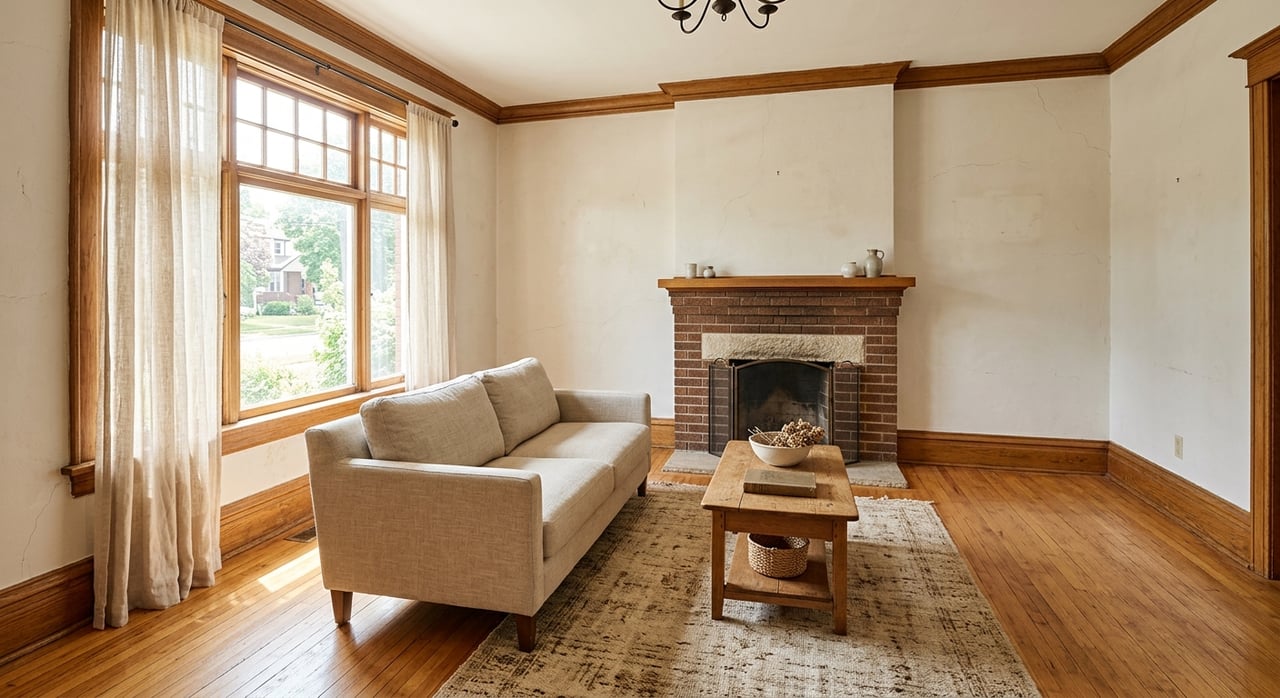
One of the first things you may notice in an older home is the floor plan. Many historic homes were designed with more separated rooms rather than the open-concept layouts that many buyers expect today.
That does not mean the layout is a problem. It just means you should think carefully about how you live day to day, how people move through the home, and whether the current setup fits your needs without major structural changes.
As you tour a home, pay attention to room flow and circulation. Ask yourself whether the kitchen, living spaces, bedrooms, and storage areas work well for your routine.
If you already know you want to remodel, try to separate cosmetic wants from structural changes. Paint, flooring, and fixtures are different from moving walls or reworking the basic floor plan.
For an older home in Mascoutah, your inspection period is one of the most important parts of the buying process. Illinois home inspection standards are broad and can cover structural components, foundation areas, roofing and roof drainage, exterior drainage and grading, plumbing, electrical, heating, cooling, interior finishes, insulation, ventilation, and visible signs of water or moisture penetration when included in the inspection contract.
A general inspection gives you a strong starting point, but older homes often need extra attention in a few high-value areas. In many cases, the building envelope and the major mechanical systems deserve the closest look.
The building envelope includes the parts of the home that separate indoor and outdoor conditions. That usually means the roof, exterior walls, windows, insulation, and air sealing.
According to the U.S. Department of Energy, many older homes have less insulation than newer homes. A whole-house energy assessment can help identify where insulation and air sealing improvements may be needed before you add more insulation.
DOE also notes that moisture control and air sealing go hand in hand. Attic air sealing can help reduce moisture problems and the stack effect that can pull radon and other soil gases upward into the house.
Older homes can still perform well, but older systems can affect both comfort and budget. During the inspection process, ask follow-up questions about the age and condition of the roof, HVAC system, electrical panel, and water heater.
You should also ask about any history of water intrusion or foundation work. These answers can help you understand whether you are looking at normal maintenance, nearing replacement cycles, or larger repair risks.
Before you buy an older home in Mascoutah, it helps to know what Illinois requires from the seller. Under Illinois law, the seller must deliver the Residential Real Property Disclosure Report before the contract is signed.
That report is important, but it is not a substitute for inspections or warranties. The law also allows the parties to negotiate an as-is sale, which means you should treat the disclosure as one piece of information, not the final word on the home’s condition.
A disclosure can alert you to known issues, but it may not uncover everything. That is especially true in older homes, where wear, deferred maintenance, and past repairs can be more complex.
Your inspection report should help identify significant deficiencies and items that may need correction or monitoring. That information can then support repair requests, credits, or a decision to move forward as written, depending on your contract terms.
If the home was built before 1978, federal lead-based paint disclosure rules usually apply. Sellers and agents must disclose known lead hazards, provide available records, and give buyers the EPA lead pamphlet before the buyer signs a contract.
For you as a buyer, this matters because older painted surfaces may require special care during future repairs or renovations. Sanding, scraping, or disturbing old paint can create hazardous dust, so lead-safe work practices are important in pre-1978 homes.
If the house was built before 1978, ask whether the seller has any records related to lead-based paint or prior remediation. You should also keep future renovation plans in mind before making an offer.
Even if the home looks well maintained, older materials can still affect how repairs are handled later. Knowing that upfront can help you budget more realistically.
Radon is one of the most important safety checks for any home purchase in Illinois, including older homes in Mascoutah. The Illinois Emergency Management Agency states that homes with elevated radon have been found throughout Illinois and recommends testing all homes regardless of location.
The Illinois Radon Awareness Act also requires sellers to provide a state pamphlet and the Disclosure of Information on Radon Hazards. This is not just a formality. The Illinois Department of Public Health says 41% of Illinois homes tested had radon above the EPA action level of 4.0 pCi/L.
Radon cannot be seen or smelled, so testing is the only way to know whether levels are elevated. If a recent radon test is not available, ask about adding one during your due diligence period.
For many buyers, this is one of the simplest ways to reduce uncertainty before closing. It is a practical step that can give you a clearer picture of the home you are buying.
Older homes reward buyers who ask good questions early. A strong process can help you avoid surprises and focus your budget where it matters most.
Here are some of the most useful questions to ask when buying an older home in Mascoutah:
Illinois licenses home inspectors through the Illinois Department of Financial and Professional Regulation. The Consumer Financial Protection Bureau also recommends scheduling an independent inspection as soon as possible, attending if you can, and checking the inspector’s licensing authority.
That small step can make a big difference. A qualified, licensed inspector helps you understand what is visible today, what may need more review, and what issues could affect your decision.
Buying an older home is not only about spotting problems. It is also about understanding which issues are common, which ones are more serious, and how to keep the transaction moving on schedule.
That is where local guidance can help. When you pair a licensed inspector with an agent who understands the southern Illinois market, you are better positioned to sort through inspection findings, stay organized, and make practical decisions based on the home in front of you.
Older homes in Mascoutah can offer lasting value, established surroundings, and a style that many buyers appreciate. If you go in with a clear plan for inspections, disclosures, lead, radon, and system age, you will be in a much stronger position to buy with confidence.
If you are thinking about buying in Mascoutah and want straightforward local guidance, connect with Jay Kehrer for hands-on support through every step.
Stay up to date on the latest real estate trends.
We pride ourselves in providing personalized solutions that bring our clients closer to their dream properties and enhance their long-term wealth.