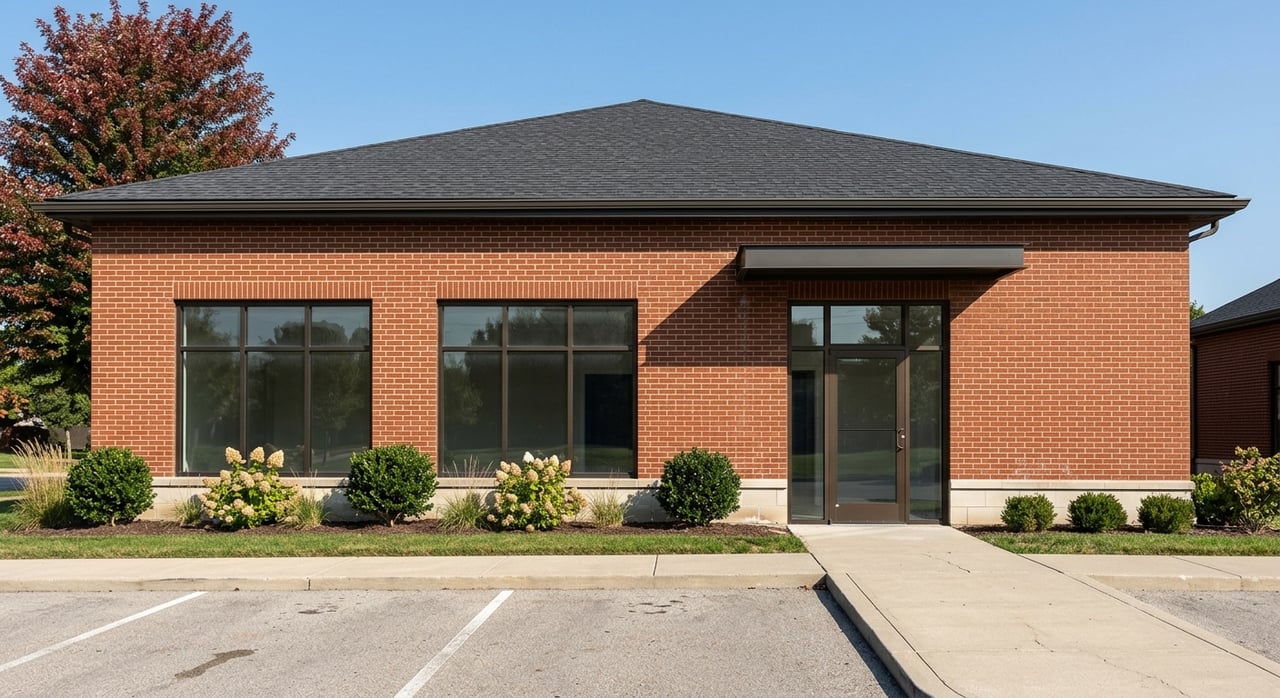
Your Guide to O'Fallon IL Commercial Real Estate Space
April 23, 2026
April 23, 2026
If you pick the wrong commercial space in O'Fallon, you can lose time, money, and momentum before your doors even open. Whether you are leasing your first storefront, expanding into a larger office, or buying a property for long-term control, the right fit goes far beyond square footage. In this guide, you will learn how to evaluate location, zoning, approvals, and timelines so you can make a smarter move in O'Fallon. Let’s dive in.
O'Fallon has a strong local foundation for commercial activity. The city reports a population of 32,289 and describes itself as about 20 minutes from downtown St. Louis and next door to Scott Air Force Base, which helps explain why transportation access is such a key theme in local planning. You can see that positioning in the city’s community overview and history information.
The employer base also gives you useful context when you are thinking about customer traffic and recurring demand. According to the city’s fiscal year 2025 budget document, major employers include HSHS St. Elizabeth’s Hospital, O'Fallon School District 90, O'Fallon Township High School District 203, Walmart, Sam’s Club, Menards, Home Depot, Schnucks, and Metro RecPlex. That mix suggests a steady base for many retail, office, and service businesses.
In O'Fallon, access often matters more than the mailing address itself. The city’s transportation planning points to Interstate 64, Highway 50, Green Mount Road, Scott-Troy Road or IL 158, and Lincoln Avenue as major roadways, with interchanges historically driving commercial, industrial, and institutional development. You can review that framework in the city’s transportation study.
For many business owners, Highway 50 is the logical place to start. The city’s Forward 50 Great Streets Initiative breaks the corridor into several subareas, including State Street, Green Mount Road, 3rd Street, Marie Schaefer, Highway 50 and Lincoln, Lincoln Avenue, Community Park, OTHS, and Scott-Troy Road. That tells you the city sees this corridor as a continuing area of focus for visibility, access, and targeted improvements.
When you narrow your search, these O'Fallon areas often deserve a closer look:
Downtown can be especially appealing if your business benefits from a traditional main street setting. The city describes downtown as home to boutiques, businesses, restaurants, and events such as Vine Street Market in its About O'Fallon page.
One of the biggest mistakes you can make is falling in love with a building before confirming that your business can legally operate there. O'Fallon’s zoning code includes districts such as B-1 Community Business, B-2 General Business, and O-1 Office, and the code states that uses not specifically listed are presumed prohibited unless the City Council determines they are similar and compatible. You can review the city’s zoning code before you get too far into negotiations.
The practical takeaway is simple: ask whether your intended use is allowed in the current zoning district before you sign a lease or commit earnest money. The city’s Planning and Zoning Division handles zoning, subdivision code, and site-plan review, and it coordinates with Engineering, Fire, and Public Safety. The city also notes on its zoning map and code resources page that a Certificate of Zoning Compliance is issued only when the proposed use meets the ordinance.
O'Fallon’s 2040 Master Plan gives you another useful lens when comparing locations. It identifies broad land-use categories and the kinds of activities they are meant to support. That can help you judge whether a site fits not only your current needs, but also the city’s longer-term vision.
Based on the 2040 Master Plan, here is a simple way to think about those categories:
| Land-use category | Best fit for | Typical location pattern |
|---|---|---|
| General Commercial | Retail, personal services, professional services, business services, institutional uses | Along arterial or collector streets with full infrastructure |
| Office/Service | Professional offices, financial institutions, business services, limited ancillary retail | Along arterial or collector streets with full infrastructure |
| Regional Commercial | Regional retail, restaurants, hotels, conference, entertainment uses | Near major intersections and interstate exits or overpasses |
If your concept depends on heavy traffic, broad visibility, or easy regional access, a site near a major intersection or interstate interchange may make more sense than a lower-cost space tucked farther inside a neighborhood commercial strip.
Another smart step is to see whether a property sits inside a redevelopment district. O'Fallon has several TIF districts, including Central City TIF, Central Park TIF, Green Mount Medical Campus TIF, Illinois 158 Corridor TIF, Rasp Farm TIF, and Route 50 or Scott-Troy Road TIF. The city’s TIF information page also points you to the GIS map, which is one of the fastest ways to verify whether a parcel is in a TIF district or the Enterprise Zone.
This does not automatically mean a property is the right fit, but it does tell you where the city expects commercial activity and investment to cluster. If you are comparing two similar spaces, location inside one of these districts may be worth discussing early in your due diligence.
A space that looks move-in ready may still require approvals before you can open. O'Fallon requires a commercial occupancy permit when ownership or occupancy changes, and the city’s property maintenance program covers commercial properties and tenant spaces. You can review those requirements on the city’s occupancy permit and property maintenance page.
If you are planning a tenant build-out, remodel, addition, or change of use, you may also need building, plumbing, and electrical permits. The city’s business requirements page explains that final site plan review can happen at the same time as the commercial building permit application, though larger or more complex plans may be sent to a third-party reviewer.
Opening dates often slip because buyers and tenants underestimate approval timing. In O'Fallon, the city advises allowing at least 75 days before business-license approval if rezoning is needed. Most new commercial, office, and subdivision projects that require Planned Use review typically take about 75 to 90 days, according to the city’s Planned Use overview.
For occupancy permits, timing matters too. After you submit the application, you must contact the city within 7 days to schedule inspection, the inspection must happen within 30 days, and the permit must be obtained within 30 days after inspection. The property also needs water and electricity turned on for inspection.
Business registration is usually faster once everything else is in place. The city says registrations are typically issued within 5 to 10 business days once all requirements are met, and it strives to issue licenses within 5 business days after complete paperwork is submitted.
If your business plan includes exterior changes, do not wait until the last minute to check design standards. O'Fallon maintains a Commercial Design Handbook and Downtown Design Guidelines, which can affect signage, awnings, lighting, storefront work, and other visible improvements.
This matters most in downtown settings or anywhere your concept depends on curb appeal and branding. A space may work physically, but your budget and timeline can change quickly if exterior updates need to follow city design guidance.
For many small business owners, leasing is the faster path. If the space already matches your intended use and has a current occupancy permit, you may be able to shorten the timeline and reduce upfront risk. That can be especially helpful if your priority is opening quickly.
Buying can make more sense when you want long-term control over the site, parking, signage, or improvements. It can also be the better option if you plan to stay for years and want to shape the property around your business. Just remember that ownership does not remove city requirements, and the timeline can stretch if zoning, Planned Use review, or major build-out work is involved.
Before you sign a lease or make an offer, work through these basics:
A careful review on the front end can save you from expensive surprises later.
Finding the right commercial space is not just about browsing listings. You need local context, practical guidance, and someone who will help you look past the photos to the details that affect your timeline and budget. That is especially true in a market like O'Fallon, where corridor access, zoning fit, and city approvals can shape the success of your move.
If you are weighing lease options, comparing purchase opportunities, or trying to understand which part of O'Fallon fits your business best, Jay Kehrer can help you approach the process with local insight and straightforward advice.
Stay up to date on the latest real estate trends.
We pride ourselves in providing personalized solutions that bring our clients closer to their dream properties and enhance their long-term wealth.