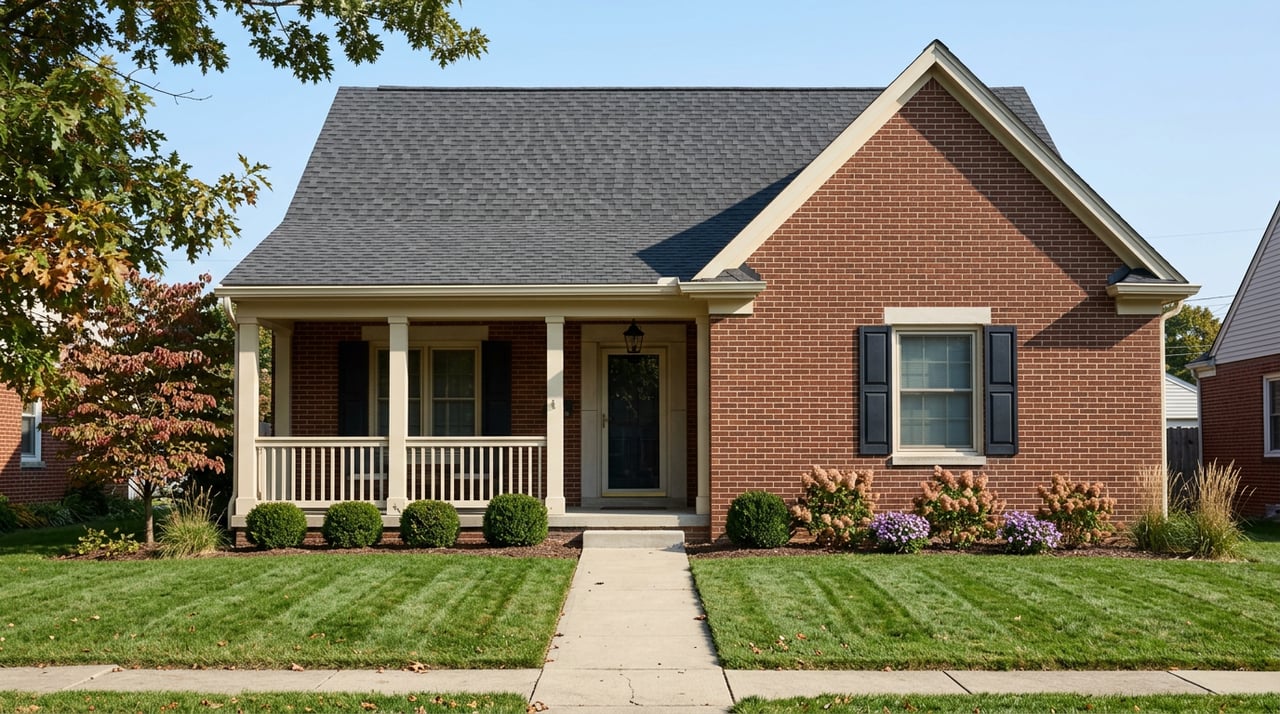
Nashville, Illinois Fall Festival: When Downtown Takes Over
August 13, 2026
August 13, 2026
Ask someone in Nashville what they're doing this weekend, and if the answer involves the lake, you still don't know where they're going. That's not a riddle. It's just how a town of about 3,100 people ended up with two separate bodies of water that get lumped under the same word, one reached by a quick turn off Route 15 and one substantial enough to carry its own state park designation. Locals sort this out without thinking. Everyone else finds out the hard way, usually by showing up with a boat trailer at the smaller lake expecting a full day on the water.
If someone says "the lake" without qualifying it, they usually mean the one everybody learned to fish at first. Nashville City Lake, sometimes labeled Nashville City Reservoir depending on which map you're using, sits just east of town off State Route 15, a short turn onto Reservoir Road from there. It's a 30-acre lake built in 1931, with a maximum depth of 22 feet. It has a 10-horsepower motor limit and a one-lane boat ramp with limited parking, which tells you everything about what kind of afternoon this lake is built for. Nobody's pulling a wakeboarder across it.
What it does hold is largemouth bass, channel catfish, crappie and bluegill, along with redear sunfish according to state survey records. The bass fishing here is more restrictive than you'd expect for a pond this size: a one-fish daily limit with an 18-inch minimum, a regulation the Illinois Department of Natural Resources put in place back in 2016 and never walked back. Crappie get the opposite treatment. In small lakes like this one, crappie populations tend to stunt and overpopulate, so IDNR actively encourages anglers to keep everything they catch regardless of size. None of the crappie collected in the state's most recent published fall survey ran over nine inches, which is exactly the kind of lake this is: not a trophy destination, but a reliable one, a few minutes from downtown.
Head a different direction out of town and the word "lake" starts meaning something else entirely. Washington County Lake covers 248 acres with 13 miles of shoreline, run as a state natural area with more than 900 acres attached for hunting. This isn't a scaled-up version of the city lake. It's a different category of place, built for boating trips and full-day outings rather than an evening walk down to the bank after dinner.
| Nashville City Lake | Washington County Lake | |
|---|---|---|
| Size | 30 acres | 248 acres |
| Shoreline | Not reported | 13 miles |
| Motor limit | 10 horsepower | No published limit |
| Established | 1931 | Not specified in state listing |
| Hunting acreage | None | 900+ acres |
| Typical visit | Bank fishing, quick trip | Boating, full outing |
The gap between these two numbers, 30 acres against 248, is the whole story. One is a neighborhood pond that happens to have a name and a set of state fishing regulations attached to it. The other is a real destination that draws people from outside Washington County entirely, the kind of place you plan a Saturday around rather than fit one in on the way home.
This isn't trivia. It's the reason two households in the same town can both say "we spent the morning at the lake" and mean completely different mornings. A parent teaching a kid to cast for the first time, or someone squeezing in an hour before work, heads to the in-town lake because the ramp, the regulations, and the horsepower limit all point toward a short, low-stakes trip. Someone loading a boat for a full day on the water, or planning a fall hunting trip on the surrounding acreage, is headed to Washington County Lake instead, a state-run site large enough to need its own park designation rather than a local nickname.
Newcomers to town tend to assume there's one lake and everyone's just being vague about which part of it they mean. That assumption falls apart the first time you try to launch a bass boat at the in-town ramp and realize the lake has a 10-horsepower motor limit. It falls apart again if you head to the state site expecting a quiet stop and instead find a lake with more shoreline than most people cover in a weekend.
For most of the calendar, Nashville's weekend gravity points toward one of these two lakes. Late September breaks that pattern. The Nashville Fall Festival lands on the last full weekend of the month, September 25 and 26 this year, and for those two days the town's attention shifts away from the water entirely and toward the businesses clustered within a few blocks of each other downtown.
That stretch of town is compact enough to name outright. Girolamo Pizzeria sits on Court Street. Buretta's Bar & Grill and the Kroger both sit along St. Louis Street. All Mart Wines & Spirits and Nashville Dairy Queen anchor different ends of Mill Street. None of these sit more than a short walk or drive from each other in a town this size, which is part of why a festival weekend here feels different from a festival in a bigger town: there's no shuttle system or satellite parking lot, just a small grid of streets absorbing a weekend's worth of extra foot traffic all at once.
By the following Saturday, the pull back toward the water reasserts itself, and early fall happens to be a good stretch for it. Fish move shallower as the water cools, which is part of why anglers keep coming back to the city lake specifically in September and October rather than treating it as a summer-only spot.
None of this shows up on a listing sheet, and it shouldn't. But it's the kind of detail that tells you whether a town's daily rhythm fits how you actually want to spend a Saturday. A household that measures a good weekend by proximity, a quick drive to a lake, a short walk to a festival, a short walk to dinner after, finds a lot to like about how compact Nashville's map really is. A household planning around acreage, hunting season, or a boat that needs real room to move finds that Washington County Lake and the land around it change the calculation entirely, which is also why hunting and acreage transactions in this part of Washington County carry their own logic worth understanding before you commit to either side of that line.
Nashville, Illinois runs on a rhythm most outsiders miss on the first pass: two lakes doing two different jobs, and one weekend a year when neither one is the point. That's the kind of thing you only know by living here, or by working with people who do.
If you're weighing what a move to Nashville or the surrounding Washington County towns would actually look like day to day, from lake access to school calendars to what a listing near either side of town really offers, The Kehrer Team has spent years working these streets and these lakes both. Contact Your Trusted Real Estate Partners to talk through what fits.
This article is general information, not legal, tax or financial advice. Consult a qualified professional about your situation.
Stay up to date on the latest real estate trends.
We pride ourselves in providing personalized solutions that bring our clients closer to their dream properties and enhance their long-term wealth.